
Weather & Best Times to Visit Coachella Valley
Mild winters, warm springs, hot summers—plan around your pace and the desert’s rhythm
Coachella Valley’s desert climate brings blue‑sky winters, warm springs, and hot, dry summers with big day‑to‑night temperature swings. On this page, you’ll find a season‑by‑season guide, essential numbers for packing and timing, notes on spring winds and summer monsoon chances, plus a link to the live NWS forecast. Use it to choose your dates—and then jump to RV Sites, Vacation Rentals, our Resort Map, and 360° Tours to finalize plans.
Year at a Glance
Winter (Dec–Feb)
Expect mild days and cool nights—great for hiking, golf, and patio time. Winter is the snowbird sweet spot, with average daytime highs near the upper‑60s to low‑70s and the highest chance of rain arriving mid‑winter (still just a few days a month on average).
Spring (Mar–May)
Summer (Jun–Sep)
Hot, dry, and sunny. Midday highs in peak summer regularly climb into the upper‑100s and low‑110s, but early mornings and evenings cool off nicely for pools, putting, and patio dining. A few afternoons may see monsoon‑driven clouds or storms July–September—check forecasts, plan activities for the cooler hours, and hydrate.
Fall (Oct–Nov)
Warm days taper to very comfortable afternoons by November, with crisp nights and clear skies—ideal for hiking and stargazing. Early October can still feel summery; late fall trends closer to winter‑mild.

Numbers That Help You Plan
- Typical summer peak: July average high around 106–107°F; average low ~78–79°F (Palm Springs & PSP).
- Typical winter low point: December average high ~69°F; average low ~46–47°F.
- April (festival month) in nearby Indio: highs usually mid‑80s to low‑90s, lows mid‑50s to low‑60s.
- Wettest month (fewest days, but highest chance): February averages ~3–4 wet days ≥0.04″ in Coachella.
- Windiest stretch: late spring often brings breezy afternoons valley‑wide—plan earlier activities.
- Monsoon window: occasional July–Sept afternoon storms can influence humidity and visibility.
Monthly Notes (What to Expect)
Winter (Dec–Feb)
Days are pleasant and nights cool; pack a light jacket and layers for mornings. This is prime time for walking the Resort lakes, The Course putting, and mid‑day trails. Light winter rains are possible, with the highest chance in February—still limited to just a few days on average.
Spring (Mar–May)
Mornings are ideal for hikes and scenic drives; afternoons can be breezy, especially in late spring. Expect 70s–90s depending on the month. April is event‑heavy—reserve early and plan dinner times to avoid crowds. Return to the resort for pools, hot tubs, pickleball, and sunsets.
Summer (Jun–Sep)
Plan early/late. Midday heat often reaches the low‑100s; take advantage of mornings/evenings for resort amenities and quick outings. On some days, the North American Monsoon can bring clouds, humidity, or isolated storms—check the NWS forecast before longer drives and watch for reduced visibility after gusty outflows. Hydration and sun protection are non‑negotiable.
Fall (Oct–Nov)
October often feels like a warm extension of summer, then temperatures trend down through November into comfortable hiking weather. It’s a favorite shoulder season for golfers and photographers—clear evenings, crisp mornings, and vivid skies.
What to Pack & When to Go
- Always: refillable water bottle, hat, SPF, sunglasses, lip balm, comfy walking shoes.
- Winter: light jacket for mornings/evenings; layers for 40s–50s nights.
- Spring: windbreaker for breezy afternoons; allergy meds if sensitive to dust/pollen.
- Summer: UPF clothing, cooling towel, electrolyte tabs; plan indoor mid‑day breaks.
- Fall: light layers; tripod and extra batteries for golden‑hour photography.
- Snowbirds & long‑stays: Nov–Mar (mild days; community vibe).
- Families: Mar–May and Oct–Nov (comfortable temps + resort amenities).
- Festival friends: April (book early; plan shade + layers).
- Hikers/photographers: Oct–Apr (cooler starts; clear evening skies).
- Rallies & groups: Nov–Mar and late Oct/early Apr shoulder windows (stable weather + availability).
Live Conditions & Map
Check the National Weather Service for the latest Coachella Valley forecast before driving or booking timed tickets.
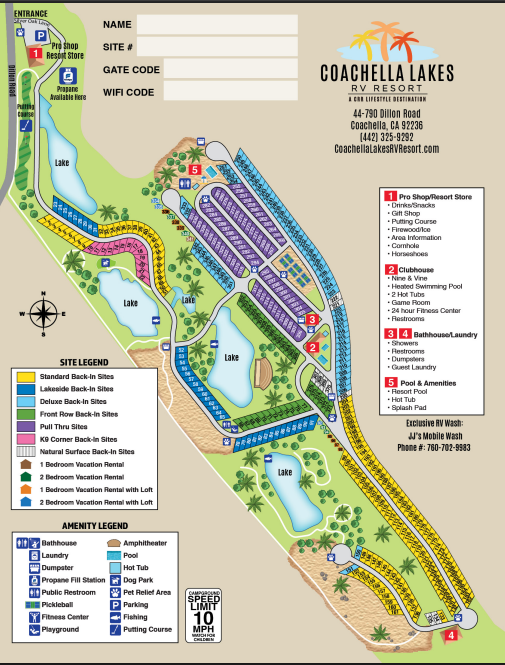
Preview the property with our Resort Map and 360° Tours so you know your bearings on arrival (roads, amenities, and site areas).
Weather & Timing FAQs
When is the best weather?
For many guests, Nov–Apr offers the most comfortable daytime temps and cool nights, with April trending warm but lively due to events. Summers are hot but predictable—great if you plan early/late and enjoy pools and evenings.
How windy does it get in spring?
Late spring often brings breezy afternoons across the valley. Plan morning hikes and leave afternoons for the pool, putting, or a scenic drive.
Does it rain much?
Rain is infrequent. The wettest month is typically February, averaging only a few wet days. Always check the forecast.
What is the “monsoon,” and does it affect the valley?
The North American Monsoon can occasionally bring summer moisture and isolated thunderstorms July–September—more cloud/humidity than all‑day rain. Monitor the NWS forecast during this period.
Where can I see typical temperatures for planning?
The North American Monsoon can occasionally bring summer moisture and isolated thunderstorms July–September—more cloud/humidity than all‑day rain. Monitor the NWS forecast during this period.